Skip to content
Table of Contents
Every aesthetic treatment begins long before the first injection.
One of the biggest misconceptions about cosmetic injectables is that patients simply choose a treatment—such as Botox®, dermal fillers, or Sculptra®—and the appointment begins. In reality, the consultation is often the most important part of the entire experience.
Before recommending any treatment, I evaluate the face as a whole. Facial anatomy, muscle movement, skin quality, aging patterns, proportions, previous cosmetic procedures, and each patient’s personal goals all influence my recommendations.
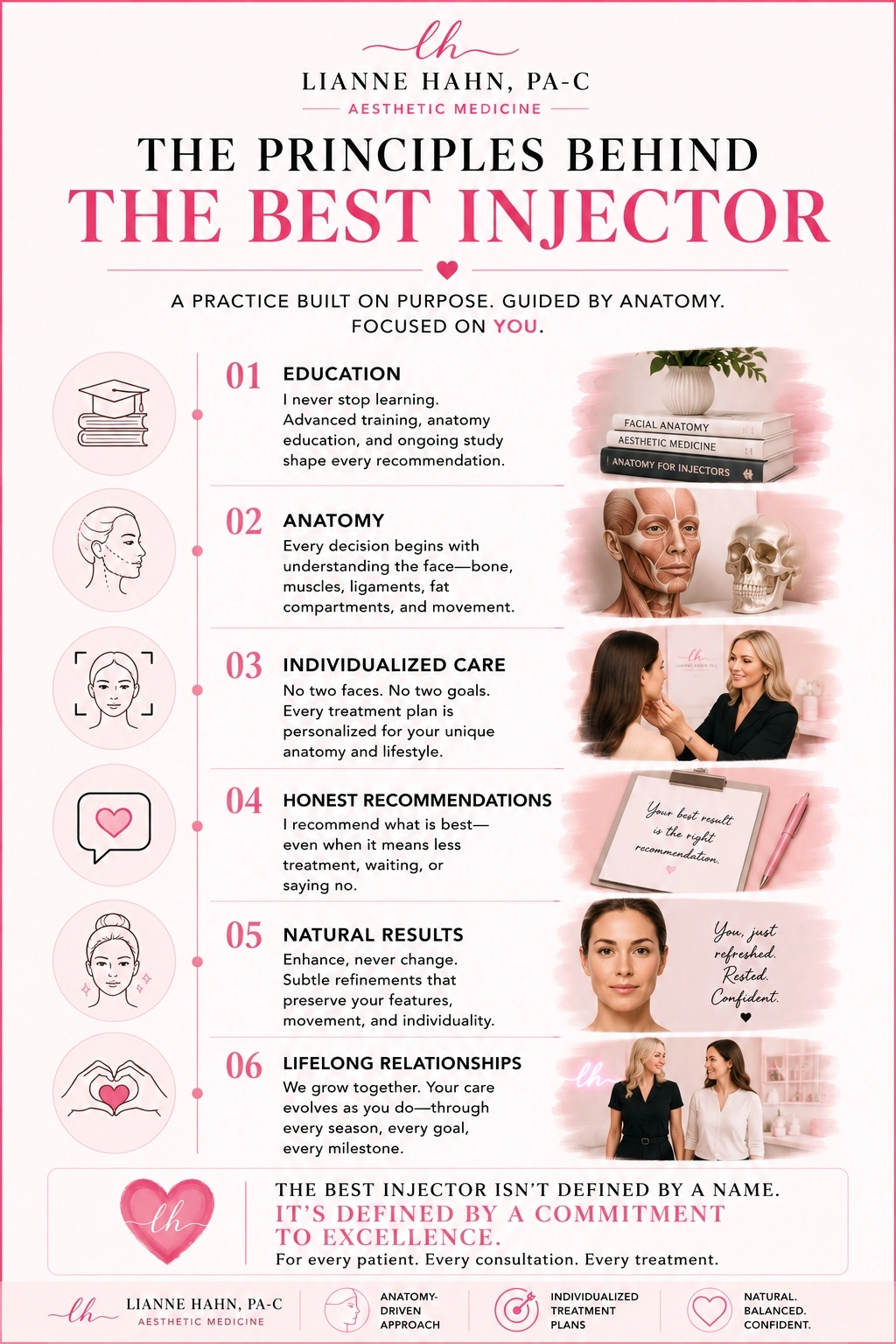
This comprehensive assessment allows me to create treatment plans that are individualized, medically appropriate, and designed to produce natural-looking results rather than one-size-fits-all outcomes.
Every Face Ages Differently
One of the first things I explain during a consultation is that no two faces age in exactly the same way.
Some individuals experience early volume loss through the cheeks. Others develop stronger dynamic lines from facial movement. Some notice changes in skin texture, while others lose structural support around the jawline or chin.
Genetics, sun exposure, lifestyle, weight fluctuations, and natural collagen loss all contribute to how the face changes over time.
Rather than assuming every patient needs the same treatment, I begin by understanding how that individual face has changed and what concerns matter most to the patient.
Listening Comes Before Treating
Before examining facial anatomy, I spend time listening.
Patients often arrive with a specific request-such as treating their lips, forehead lines, or smile lines—but understanding why they are seeking treatment is just as important as identifying the area itself.
Some patients want to look more rested. Others want subtle refinement, improved facial balance, or preventative treatment. By understanding their goals, I can recommend an approach that aligns with their expectations while maintaining a natural appearance.
This conversation also helps identify situations where a different treatment—or sometimes no treatment at all—may be the most appropriate recommendation.
Understanding Facial Structure
Every face has a unique structural foundation.
During my assessment, I evaluate:
- Bone structure
- Facial proportions
- Chin projection
- Jawline definition
- Midface support
- Cheek volume
- Profile balance
- Overall facial harmony
These structural features influence how the face ages and how different treatments may affect the final result.
Rather than focusing on one isolated concern, I evaluate how each feature relates to the others to create a balanced treatment plan.
Dynamic Assessment Matters
The face is constantly moving.
For this reason, I evaluate both the face at rest and during natural expression.
Patients are often asked to:
- Smile
- Frown
- Raise their eyebrows
- Squint
- Purse their lips
- Relax completely
Watching facial movement helps me understand muscle strength, asymmetries, and the way facial expressions contribute to dynamic wrinkles.
This information guides recommendations for neuromodulators such as Botox® and helps preserve natural facial expression while softening unwanted lines.
Evaluating Skin Quality
Injectables are only one part of facial rejuvenation.
Healthy skin plays an important role in achieving natural-looking results.
During consultation I assess:
- Skin thickness
- Elasticity
- Texture
- Sun damage
- Hydration
- Fine lines
- Pigmentation
- Acne scarring
Sometimes improving skin quality through treatments such as SkinPen® microneedling, regenerative therapies, or medical-grade skincare may provide greater benefit than additional filler.
Assessing Volume Loss
Aging involves gradual changes beneath the skin as well as on the surface.
Over time, facial fat compartments shift, collagen declines, and bone structure changes. These natural processes can contribute to hollowing, loss of support, and changes in facial contours.
During evaluation, I determine:
- Where volume has been lost
- Whether collagen stimulation may be appropriate
- Whether structural support is needed
- Whether filler is the right solution
Not every patient benefits from adding volume, and identifying the underlying cause of a concern is essential before recommending treatment.
Reviewing Previous Cosmetic Treatments
Understanding a patient’s treatment history is an important part of developing a safe and effective plan.
We discuss:
- Previous Botox® treatments
- Prior dermal filler
- Biostimulator treatments
- Dissolved filler
- Laser procedures
- Surgery
- Skin treatments
- Medical history
These details help guide future recommendations and reduce the risk of over-treatment or unnecessary procedures.
Sometimes the Best Recommendation Is to Wait
One of the most important parts of consultation is recognizing when treatment should not be performed.
There are times when:
- additional filler is not appropriate
- expectations are unrealistic
- another treatment would produce better results
- facial proportions are already balanced
- waiting is the safest option
Honest recommendations build trust and support long-term outcomes.
My goal is never simply to perform a procedure. It is to recommend what is medically appropriate for each individual patient.
Creating an Individualized Treatment Plan
The future of aesthetic medicine belongs to injectors who understand far more than simply where to place Botox After completing a comprehensive assessment, I develop a personalized treatment plan.
That plan may include one treatment—or it may involve a staged approach over several appointments.
Recommendations are based on:
- Anatomy
- Facial balance
- Aging patterns
- Patient priorities
- Budget
- Recovery considerations
- Long-term goals
Every recommendation is designed to complement the patient’s natural features while preserving movement and expression.
Why Full-Face Assessment Produces Better Results
One of the reasons I emphasize full-face evaluation is because improving one area often changes another.
For example:
A chin may appear recessed because the jawline lacks definition.
Smile lines may become less noticeable after restoring cheek support.
Lip balance may improve without increasing lip volume.
These relationships are why I believe facial balancing should always begin with comprehensive assessment rather than isolated treatment requests.
My Consultation Philosophy
The consultation is never about convincing someone to undergo treatment.
It is about education.
I want every patient to understand:
- why I am making a recommendation
- what alternatives exist
- what results are realistic
- what risks should be considered
- what long-term planning looks like
When patients understand the reasoning behind a treatment plan, they are better equipped to make informed decisions and often achieve more satisfying, natural-looking outcomes.
Conclusion
Every face is unique, and every treatment plan should reflect that.
By combining careful listening, detailed facial assessment, anatomy-based decision making, and individualized recommendations, I strive to create results that enhance rather than change the way my patients look.
Whether someone is considering preventative Botox®, facial balancing, collagen stimulation with Sculptra®, or another aesthetic treatment, I believe every successful outcome begins with one thing:
A thoughtful consultation.
Schedule a Comprehensive Facial Assessment
If you’re interested in a personalized consultation focused on facial harmony, anatomy, and natural-looking results, learn more about the services available at The Best Injector.